
OUR BEYOND
THE DESK APPROACH
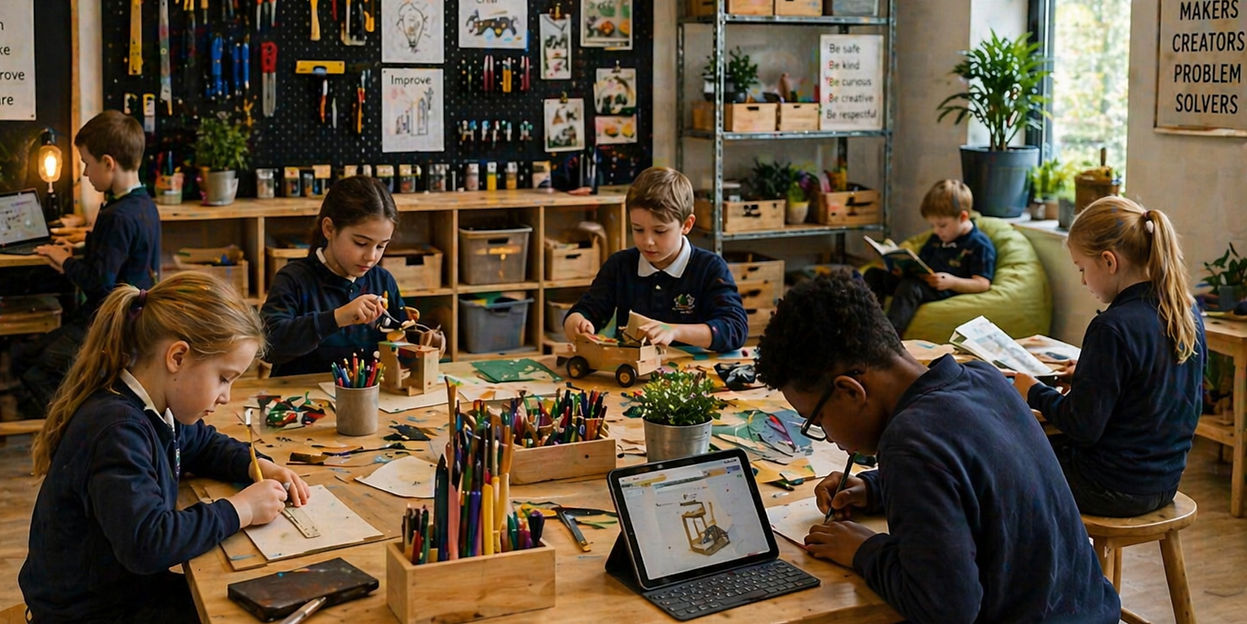
In some of our schools, learning is organised through a studio model that blends direct teaching with opportunities for pupils to practise and apply their understanding independently. This approach ensures that learning is not only clearly taught but also meaningfully used, allowing pupils to revisit, explore and deepen their knowledge in a purposeful way. Within this structure, pupils develop confidence, independence and a stronger sense of ownership over their learning.
Learning beyond the desk, designed for
independence and inclusion
STUDIO-BASED LEARNING
Children are taught in studios every day, where learning is carefully structured to move from explicit teaching to independent application. Following direct teaching of small, manageable steps, pupils engage in structured studio tasks supported by continuous provision, enabling them to access resources independently and apply their learning with increasing confidence.
Our studios are deliberately designed to be inclusive environments where all pupils can access learning successfully. This includes the use of clear, consistent task instructions presented through both written text and audio, ensuring accessibility for all learners. Vocabulary prompts and sentence starters support communication and thinking, while help desks provide pupils with immediate access to key knowledge and previously taught skills.
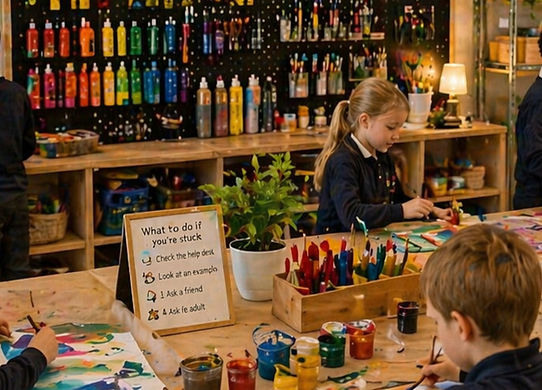
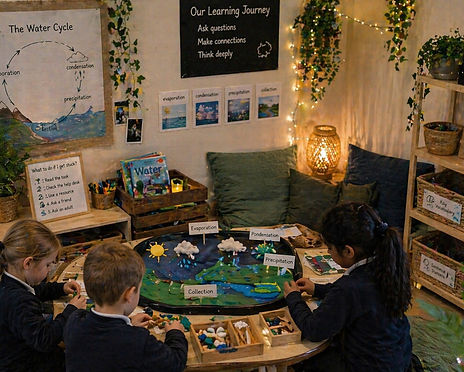
We create sensory-aware environments to support regulation and focus, including soft lighting, calm, uncluttered spaces and the availability of tools such as ear defenders. Flexible seating options allow pupils to choose how they work best, promoting comfort and engagement.
Adults act as enablers within the studios, providing timely, targeted support that is carefully adjusted based on need and gradually reduced to promote independence. This ensures that pupils are supported without becoming reliant on adult assistance.
SMALL GROUP LEARNING
Small group learning sits at the heart of how the studios are made effective. While the studios provide rich opportunities for exploration, creativity and purposeful play, they are not unstructured or passive spaces. Children move within them with increasing independence, applying what they have already been taught, revisiting ideas, and deepening their understanding through practice and enquiry.
Alongside this, the teacher works deliberately with small groups at a dedicated teaching table. This space is calm, focused and highly interactive. Here, the teacher models new learning explicitly, using concrete resources such as base ten to make mathematical thinking visible. Children are not simply watching; they are actively engaged, responding, manipulating resources, explaining their thinking and learning from one another. The small group allows the teacher to adjust teaching in the moment, responding precisely to what each child understands or finds challenging.

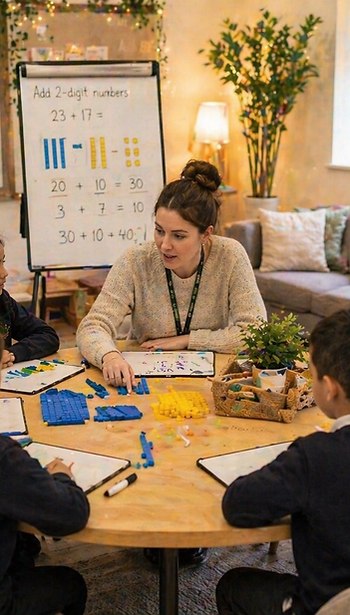
This approach creates a careful balance. The studios allow for independence, application and creativity, while the small group ensures direct teaching, precision and depth. Children are not left to ‘just play’; instead, play and exploration are intentionally connected to clearly taught knowledge and skills.
What we have found is that no child is left behind. Misconceptions are identified immediately within small group teaching and addressed there and then. The teacher has a clear view of each child’s understanding, allowing for swift support or extension. This means learning is responsive, inclusive and precise, ensuring that every child moves forward with confidence.